Andrew LiVecchi is a humanities professor and author of epic fantasy inspired by a lifelong obsession with ancient and medieval history, mythology, and classic literature. His book, Son of the Thunder Goddess, is available for purchase.
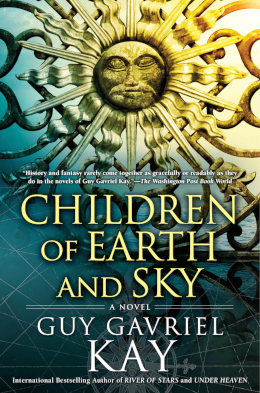
For several years now, I’ve begun each January by reading a Guy Gavriel Kay novel. This year it was Children of Earth and Sky, first published in 2016.
If you’re unfamiliar with his work, Kay writes highly literary, deeply researched epic fantasy based on specific periods of medieval history. He prepares for his novels by spending time in the locations where his books are set—or almost set, since they’re fantasy—places like the south of France, Venice, or Istanbul, and reading up on primary and secondary historical sources as if preparing to write historical fiction.
What Kay produces is not historical fiction or alternate history, but what is often called “historical fantasy.” Kay himself has referred to what he does as “history with a twist.” It can, at first glance, seem like a strange genre, awkwardly straddling the line between history and fantasy. But part of what I admire about what Kay does with history is that he is able to provide insight on the values, worldviews, and lived experiences of real historical periods, while also heightening the dramatic tension by placing the events of his books in a “mirror world.”
Children of Earth and Sky offers all these signature elements and marches out of step with the current trends of modern fantasy. It is a slow, meandering book, even less plot-driven than some of his other work (such as Tigana), and delves deeply into the psyches of its many point-of-view characters. The prose is beautiful and poetic, taking its time to weave a rich, character-driven story.
The setting is inspired by Renaissance Europe, focusing on the powers of Seressa, the Osmanli Empire, Senjan, and Dubrava (analogues of Venice, the Ottoman Empire, Senj, and Dubrovnik).
One of the most striking aspects of Kay’s work is its consistent preoccupation with time—the decay of past glories, the pain of nostalgia, the transience of human life. I’ve noticed this in every novel of his I’ve read (seven so far), but it seems especially pronounced here. This is largely because the book is set in the same almost-historical world as many of his other novels, but in a much later period. If you’ve read his previous work set in this world, then the nostalgia of Children of Earth and Sky becomes all the more poignant.
The parallels are especially striking when we compare it to the two novels comprising the Sarantine Mosaic (Sailing to Sarantium and Lord of Emperors). Inspired by the sixth-century Byzantine Empire, these books revel in the glories of the city of Sarantium (an analogue for Constantinople) with lavish descriptions of chariot racing in the hippodrome, the intrigues of the royal palace, and the beautiful mosaics of the city’s great sanctuary. Art is made the central focus through the novels’ protagonist, Crispin, a master mosaicist charged with decorating the sanctuary dome, who becomes hopelessly entangled in a web of conspiracy and political machination.
In Children of Earth and Sky, a thousand years have passed since then. Sarantium has fallen to the Osmanli Empire. Named Asharias, it is ruled now by the Osmanli Khalif. And everything is marked by change and decay.
There are several major point-of-view characters in this novel. Danica, a Senjani pirate who hungers for revenge on the Osmanlis who raided her village. Neven, her brother, who was captured by the Osmanli army as a child and raised as an elite warrior among the djanni. Marin, the talented but restless son of a wealthy Dubravae merchant. Pero, a Seressan artist tasked with painting a portrait of the powerful Khalif of Asharias. And Leonara, a disgraced nobleman’s daughter turned Seressan spy. These characters, and the many other minor figures that populate the novel, intersect in interesting and surprising ways and move through a world haunted by a long, troubled history.
In Children of Earth and Sky, we revisit many of the most iconic locations from The Sarantine Mosaic, now ruined and ravaged by time. A wayside chapel—whose dome’s depiction of the deity Jad literally flattens Crispin on his back—is now falling apart, serving as a hideout for displaced Sarantine soldiers.Sarantium’s hippodrome, with its chariot races and roaring crowds, is an abandoned wreck. Marin and Pero wander through this vast ruin, forced to imagine its former glories, piecing together fragments of text that allude to the events that we as readers once witnessed in full.
All of this works whether or not you’ve read Kay’s earlier novels. Because his world draws so closely on real history, his elegiac descriptions of civilizational decline resonate with authenticity. But for those of us who have followed him across multiple books, these moments hold even greater meaning. The former greatness of Sarantium, the fading mosaics, the empty hippodrome—these hit harder because we have been to these places before, have walked them alongside characters full of ambition and desire. We know the now “nameless” artist behind the mosaics was once Crispin, a passionate and grieving artist. For us, this is a fully “living” character, not merely a footnote lost to history. This knowledge gives us insight beyond the limited viewpoints of the novel’s characters, providing us with the long view of a historian, while sharpening our sense of loss.
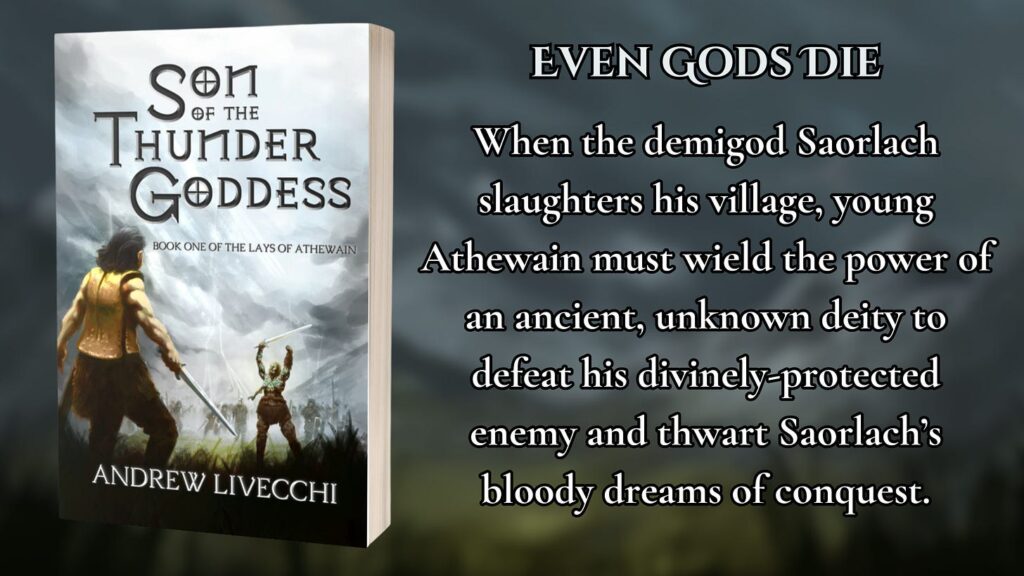
If you enjoyed this post, consider checking out my epic fantasy series, The Lays of Athewain. It builds on a lifelong love of mythology and literature and engages with many of the themes I explore here on Substack.
Leave a Reply